
বুধবার, ২১ অক্টোবর ২০২৬, ০৪:৫৬ পূর্বাহ্ন

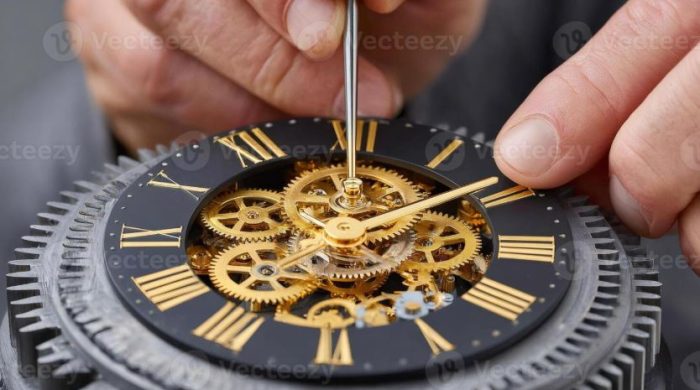
“The Frozen Hands of Time”
Writer: Azadur Rahman Bashir
Deep in the remote taiga and snow-blanketed tundra of Krasnoyarsk Krai or the Sakha Republic in northern Siberia, stands the “Send Vladimir Academy.” Artymi and Maksim are fourth-grade students there. Compared to their peers, these two friends are quite sharp and always curious about new things. School has just ended, and the two friends sit on the school veranda, deeply troubled: Where on earth can they find an old clock?
Suddenly, their class teacher, Yelena Vladimirovna, steps right in front of the two boys. Both are utterly startled. “Nothing to worry about, you have forty-eight hours according to the clock’s time. You will find an old clock within this period. But the time period depicted in the clock must strictly predate the collapse of the Soviet Union.” The two simply look at the teacher and nod with a smile.
Ninety-eight-year-old Rivan Petrovich is a man weighed down by his ninety-eight years. Yet, looking at his fighting spirit, the constant smile on his face, and his world of clocks and books, he lives life with the energy of a youth. Opening the door with ease and seeing Artymi and Maksim, he greets them: “Welcome, Artymi, Maksim.” The two step inside and sit on a small bench. Rivan Petrovich closes the door and sits beside them. “So, young couple, which way is your next assignment heading? A historical clock from before the dissolution of the Soviet Union speaks to the present…” Before Maksim can finish his sentence, Artymi interrupts, “We don’t know which way to start our journey from, so we came to seek your guidance.”
With a gentle smile, Rivan Petrovich says, “Just place my Vostok Precision right in front of you both and frame it in a picture, won’t that do?” Maksim chimes in, “But your watch doesn’t have a hour hand.”
”That is true. Then what’s the solution?” Artymi asks, to which Rivan Petrovich replies, “The artist will draw the hour hand in the picture.”
The two friends look at each other. Each tells the other, “Put your wit to work.” Maksim says, “Rivan Petrovich, we are your guests today. So it’s best to begin without delay.”
Artymi: “I didn’t quite get that.”
Petrovich: “Neither did I.”
Maksim makes Artymi stand on the right side of the massive wall clock in the living room, leaving the left side empty with the clock right in the middle. Rivan Petrovich is about to say something but stops, wanting to see how it all ends up.
Equipped with art paper, pencils, and poster colors, Maksim begins to draw like a full-fledged artist. Saying “Good work,” Rivan Petrovich steps away. Maksim immerses his soul into creating the artwork.
The elderly man goes into his kitchen. Mixing flour, eggs, milk, sugar, butter, and a pinch of salt, he instinctively fires up the stove within three or four minutes, filling the air with the aroma of freshly made blini (thin Russian pancakes). Setting the pancakes aside, the tireless man slices dark rye bread and spreads butter to make open-faced sandwiches. Arranging everything on a tray, he walks into the dining room to find the scene nearing its end. Artymi is sketching while Maksim stands on the left side of the clock. It is quite an amused setup: Artymi is standing on the right side of the clock in the drawing, while a living Maksim stands on the left, giving life to a lifeless drawing through Artymi’s hands.
”I want to see your 5G drawing make it to Greenwich!” Rivan Petrovich finishes his remark and serves the food on the tea table.
”Wrap it up, Maksim,” Artymi says as he begins putting the finishing touches to the background. Seeing the food, Maksim is deeply touched: “My friend, it would have been tough without you.”
”Alright, let’s begin,” Petrovich says as he takes food onto his own plate.
Maksim: “Artymi, are you done?”
Artymi: “You go ahead.”
Just as Petrovich and Maksim are about to start eating, Artymi says “Finished!” and takes his share as well.
Artymi: “By the way, Grandpa, did you find the overcoil hairspring for your watch?”
Petrovich: “Ah, I’m impressed you remember that name.”
“Andrei has been tracking down places that collect old watch parts.”
Suddenly, a blizzard starts howling outside. The force of the wind rattles the windows.
Maksim: “Grandpa, we must leave. It’ll be trouble if the storm gets worse.”
With his sketch pad and board packed away, the two practically flee the house. Just as they step out, a snowstorm breaks out with considerable force. Petrovich firmly shuts the door behind them, walks slowly over to stand beside the old wall clock, and begins wiping it tenderly with a handkerchief. Then, with absolute dedication, his fearless talent for watch repair goes right back to work, inspecting the scattered parts one by one.
The fury of the blizzard intensifies. Suddenly, the power goes out. The research journey is swallowed by the darkness of the night.
Though the sun fails to peek through, the daylight is quite visible outside. Even in this bone-chilling winter morning, Petrovich sits at his usual spot, making a fierce attempt to fix the old, non-working Soviet-era clock. Outside, the snowstorm rages on. At that exact moment, a knock sounds at the door. Petrovich gets up and opens it. His grandson Andrei has arrived straight from Moscow. Andrei’s face betrays the restlessness of a modern city.
”Grandpa, only you could be busting your lungs trying to fix a Soviet-era clock.”
Petrovich just smiles away Andrei’s remarks and returns to working in silence. Annoyed by his grandfather’s unhurried composure, Andrei says, “Grandpa, this clock has no value anymore. This is the era of smartwatches and the internet.”
This time, Petrovich does not get angry at all; instead, he laughs out loud. Carrying his old, rust-stained nostalgia, Petrovich lets the 5G-driven Andrei walk past him.
Petrovich has spent his entire life repairing mechanical watches—where every single gear and spring followed time with absolute precision. Yet, in Russia’s fast-changing society and digital age, everything feels accelerated yet meaningless. To Andrei, time means quick notifications flashing across a smartphone screen and an unbridled race for a career.
This mental gap between two generations is the driving force behind time and the speed of life.
Placing his phone down atop his father’s large old wooden (Yashlik) chest, Andrei’s gaze gets caught. For a moment, touched by paternal affection, he strokes the wooden box. Slowly, he opens it. Inside lie several letters from his father and grandfather, along with a diary from before the fall of the Soviet Union. In the diary, Petrovich had written:
“States and societies may change, but the time within a human heart never stops; if a person denies their own roots, they get lost in emptiness.”
The written words strike a chord deep inside Andrei—a bittersweet wave of affection. He realizes that his own life’s rush has stripped him of inner peace.
Petrovich is still hard at work fixing the old clock. Though his slow-moving body rings the bell of age, his persistent effort to keep the clock of time ticking continues unabated. Andrei gently places a hand on his grandfather’s shoulder. “Grandpa, I still haven’t found out why your old clock won’t run. I only see you working day in and day out in silence.”
Hearing Andrei’s words, Petrovich smiles at the corner of his lips. Taking his grandson’s hand gently, Petrovich says, “My dear grandson, that metal clamp or plate that holds the gear or wheel down from above—finding such an old piece is difficult in this age of notifications.”
Clasping his grandfather, the grandson replies, “Grandpa, no matter how difficult it is, discovering it is human work. The hands with which you are still putting up this untamable effort—you deserve to see its success.”
In the frozen solitude of the Soviet snow, the brass and steel heart of the Vostok beat like a single drop of warm blood. Without any battery, driven purely by the dormant life force released from the manually wound mainspring, the clock used to run. The precise oscillation of the tiny balance wheel and delicate hairspring birthed that familiar metallic “tick-tock” melody. Even through Siberia’s harshest hours, a rare alloy ‘overcoil hairspring’ kept the pace of time steady. Under the soft, meticulous touch of artisans, the stalled balance wheel would dance back to life, breathing new soul into every tiny wheel inside. In this epic of Soviet craftsmanship and boundless patience, the Vostok stood as a living symbol of human resilience and renaissance.
Moscow’s Izmailovo flea market is like a living box of memories from the distant past. Crossing the freezing emptiness of the taiga, young Andrei arrives there thousands of miles away, accompanying old Grandpa Petrovich. In that market filled with the ticking sounds of historical Soviet-era mechanical Vostok watches, a vendor warmly extends a cup of hot coffee. Suddenly, spotting a rare overcoil hairspring resting on a clerk’s table, Petrovich stops in his tracks. The melody of his passionate, industrious youth returns with just a touch of his hand. Seeing Petrovich’s gentle smile, Andrei understands that distance is merely a number to a strong will. Wearing the smile of his youth, the grandfather says, “That is true.”
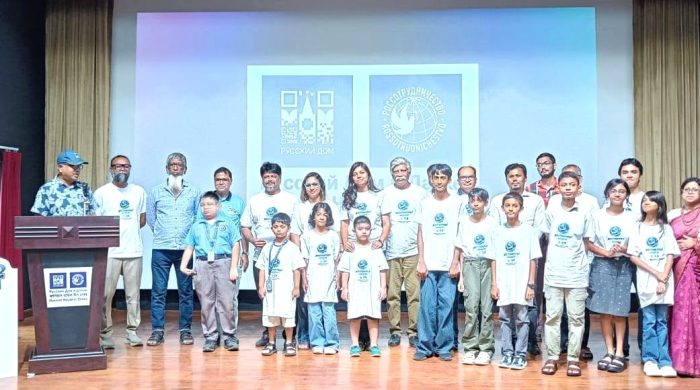
Outside, a bone-chilling snowstorm sweeps across the steppes, touching the emptiness. Young Andrei brushes the snow off his jacket and steps indoors, leading Grandpa Petrovich inside. Standing on the threshold of the wooden door is a surprise—the two pint-sized artists, Artymi and Maksim, holding their medals and certificates of honor. Witnessing this silent union of history and future on the clock of time, Andrei can only murmur, “Time is nothing more than a number, old man; life itself is its core melody, and through that melody, the roots of the old and the new recognize the truth as one.” Once inside, sitting quietly in a corner, the two innocent children watch with curiosity as two generations face each other across the harshness of winter.
Amidst the brass gears and springs scattered across the floor, the old grandfather and grandson become deeply immersed in reviving the heart of that stagnant wall clock. The moment the pendulum of the clock stirs back to life with a “tick-tock” sound sparked by the warmth rising from the Siberian chimney, it feels as though no mechanical glass has been fixed, but rather the deepest connection of the Russian soul has come alive once more. Against the backdrop of the frozen snow outside, the room echoes with an eternal, classical Russian elegance and a warm, affectionate melody. It feels not merely like a machine coming to life, but a symbol of the bridging of generational divides into a bonding of souls.
আমাদের সম্পর্কে :
সম্পাদক- গৌতম কুমার এদবর,
নির্বাহী সম্পাদক- মোঃ হারুন আর রশিদ,
যুগ্ম সম্পাদক-নাজনীন সুলতানা (স্বপ্না),
Publisher and Editor :
Gautam Kumar Edbor
ঠিকানা : ১৫১,মতিঝিল বা/এ, ঢাকা,বাংলাদেশ।
ফোন : +880 1916568675, 01685973164
ইমেইল : info@natunkagoj.com
All rights reserved © 2026